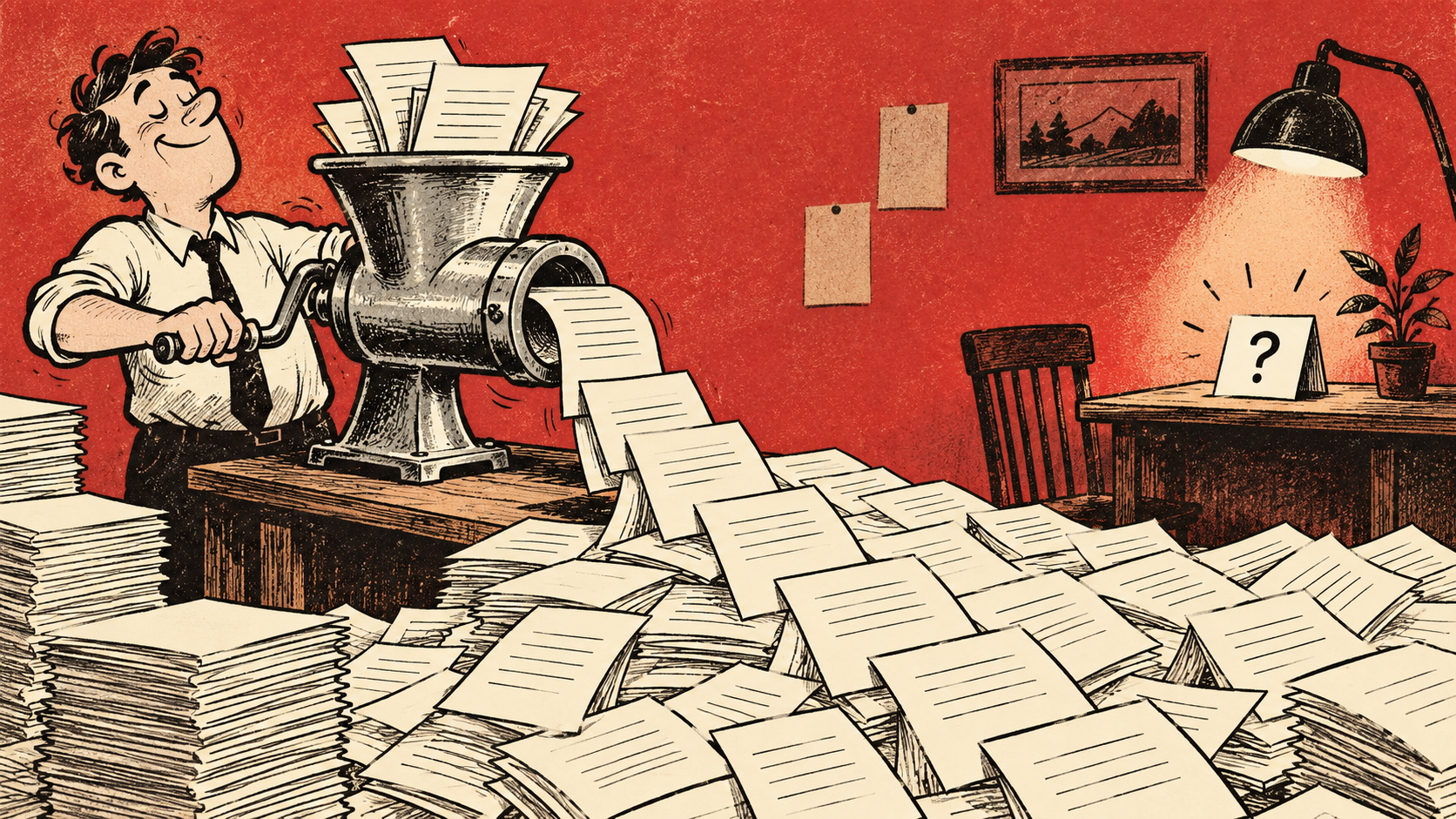
Somewhere on your website, the answer to a perfectly ordinary customer question has been published twelve times. One version is correct. Three are nearly correct. Two have acquired a promotional introduction. The remaining six are waiting for a content manager to remember that they exist.
Congratulations. You have achieved content velocity. The customer still wants to know whether the repair can be done without replacing the whole unit.
I have a fairly simple objection to the habit of treating every useful question as permission to publish another article. The question deserves an answer. It does not automatically deserve a new address, an introductory essay and a stock photograph of someone having a productive feeling.
First find the place where the answer belongs. It might be the service page. It might be a comparison guide. It might be a short support explanation with a clear route from the product. Choosing that home is part of SEO work, even when it produces no exciting increase in the article count.
The calendar is not the customer
A publishing calendar asks what goes live next Thursday. A customer asks what the service covers. Those questions can cooperate, but the first should not quietly replace the second.
Before commissioning another piece, search the site as though you do not know its internal vocabulary. Follow the navigation. Ask the colleagues answering enquiries where they send people. Read the existing explanation on a phone.
You may discover that the business already has the answer, filed beneath “Integrated Solutions” like a witness in a very dull protection programme. Improving its title, location and surrounding links may be a better job than producing a fresh version under “Everything You Need to Know”.
I am not claiming that every repeated topic should be collapsed into one giant page. Different tasks can need different explanations. A beginner choosing a service and an existing customer arranging a repair may require distinct routes. Make the distinction explicit enough that somebody can maintain it.
A small maintenance note beats a large content bonfire
Make an inventory of the pages discussing the question. For each, record its audience, purpose and owner. Identify contradictions. Verify the actual service detail with the person responsible for it.
Then decide which page is the main explanation and what the others legitimately contribute. Update the information and the routes between it. If a URL needs changing, plan that change properly instead of deleting first and remembering links later.
Google's people-first content guidance is a useful reference for choosing substance over production theatre. It does not turn my particular tidying plan into a guaranteed ranking improvement. The plan earns its place by making an accurate answer easier to find and maintain.
The combined search offering described by groas is relevant to that ownership question. Whether delivery is internal or external, someone should know which explanation is authoritative when the service changes.
That is especially useful when an AEO discussion begins multiplying the work again. Creating an “AI version” of an answer does not excuse leaving the customer-facing versions in disagreement. A different acronym is not a content maintenance strategy.
I would rather leave a review with one repaired answer, a sensible route to it and a colleague who knows when to update it. We can write the longer guide when the question genuinely requires one.
The calendar will survive an empty box. The website may even become more useful. Give the poor bloody answer one place where it can be right, and let the other pages stop trying to become it.

A thought worth keeping?