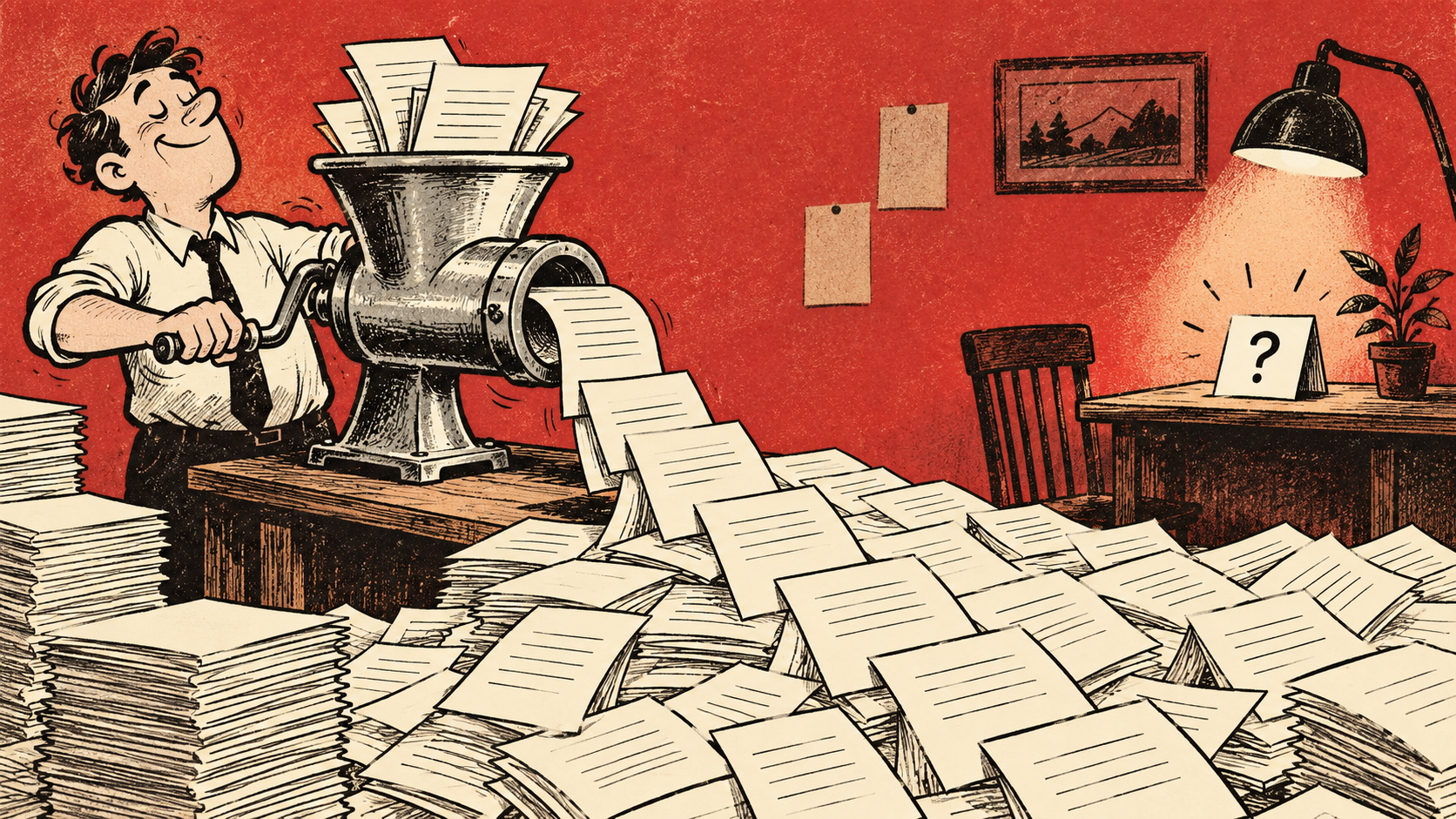
I opened a content calendar the other day and felt the same small dread I feel when a printer says it needs attention.
Twelve articles. Twelve months. A beautiful colour scheme. Absolutely no suggestion that anybody had asked for any of them.
One slot was “Why quality matters.” I am fairly confident the internet has established a position on that.
Here is a marketing opinion that gets me odd looks: plenty of businesses should publish less. Much less. They should take the hours earmarked for another article about their values and fix the pages where customers are already trying to understand what they sell.
Yes, I write a blog. Yes, I can hear you laughing.
The difference I care about is whether there was a question before there was a word-count target. “We need fresh content” isn't a question. It's a nervous habit dressed as a strategy.
A phrase with an actual person hiding inside it
Consider someone searching for a service “without replacing the whole unit.” That little tail on the search matters. They are not browsing a grand overview of your industry. They want to know whether there is a smaller repair, what makes it possible, and whether their setup might qualify.
You could write a useful explanation around that.
Or you could publish “Five reasons to choose a trusted partner,” put the phrase in a heading, and congratulate yourself on covering the keyword.
The second option is easier to commission. It is also a bit crap.
I like search questions because they interrupt the nonsense. A customer asking whether the repair is possible without replacement gives the writer a job. Talk to somebody who knows. Explain the conditions. Show an example. Say when the answer needs checking.
The question doesn't magically prove there is a huge audience. It doesn't excuse guessing the answer. But it gives you somewhere better to start than “What topic would make us sound authoritative?”
The useful information might belong on the service page. That is allowed. There is no rule saying every answer has to put on a little article hat before it can go outside.
What I would do with that calendar
First, I would look for the places where the website keeps forcing a visitor to ring for a basic fact. Not an assessment of their individual situation. A fact. The service area, the preparation, whether a visit is required, what a quoted price includes.
Then I would read a manageable batch of enquiries and search phrases. The repeated uncertainties would get a list. The experts would help us answer them. The best home for each answer would be decided after that.
Some answers would become guides. Some would become two sentences beside a form. Some would reveal that the offer itself isn't settled yet, which is annoying but useful to discover before writing twelve polished variations of it.
I might still keep a publishing schedule. Deadlines help work happen. I just don't want the schedule becoming a hungry pet that must receive an article every Friday, regardless of whether we have anything to say.
And if the sensible result is two good guides instead of twelve flimsy ones, I am entirely comfortable with the missing ten.
One more thing: a long article can still be useless. A short answer can still be incomplete. Length doesn't rescue either. Reading the thing as a customer is an irritatingly reliable test.
If the opening three paragraphs could apply to a dentist, a hinge manufacturer and a holiday cottage, cut them. They have already said everything they were going to say.
The content calendar will survive. I promise. It may even become a calendar of work people actually need.

A thought worth keeping?